 For parents · babies 0 to 12 months
What a newborn can see
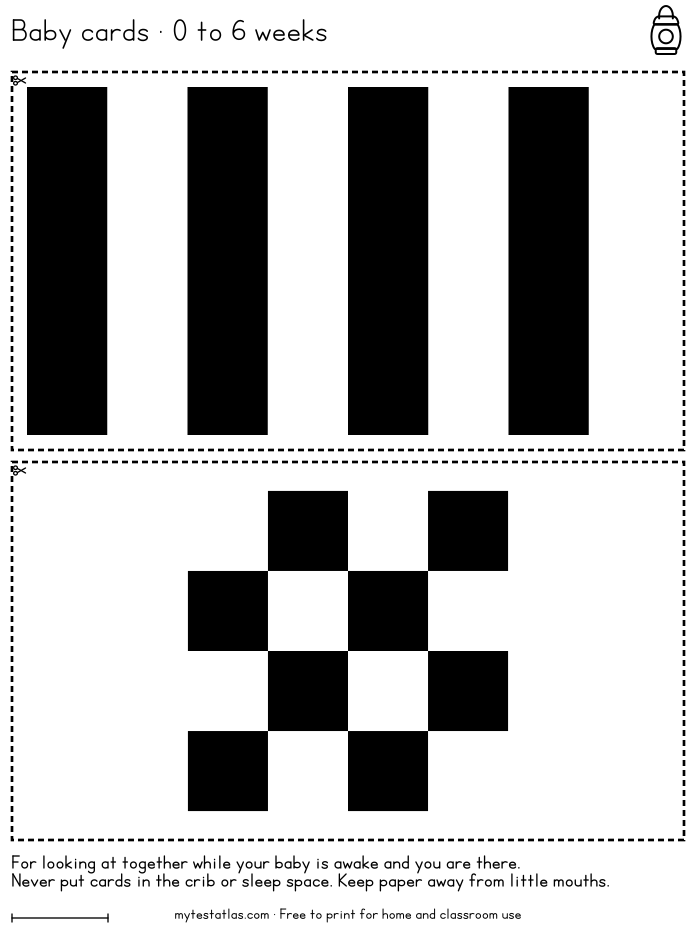
Newborns see best at about 8 to 12 inches (20 to 30 cm), about the distance to your face while you hold them. They see bold black-and-white edges much better than soft colors or fine detail. Newborns see bold black-and-white shapes best. These cards give your baby something they can actually see while you talk and play together.
Sharpness improves month by month. Color vision is useful by about 4 to 5 months, and adult-like sharpness takes about 3 years, not a few months.
Safe sleep and safe play
Cards are for awake time with you there. Nothing goes in the crib: babies sleep on their back, on a firm flat surface, with nothing else in the sleep space. Do not hang cards over a crib or bassinet, and do not use strings or ribbons near a baby. That is why this page has no mobile.
Paper tears. Keep cards out of reach of little hands and mouths, and throw away a torn card. Card stock, or laminating, makes cards sturdier; round the corners.
Which cards for which age
0 to 6 weeks: bold black and white. A newborn needs big shapes: stripes, a bullseye, a checkerboard and a simple face, with stripes and shapes at least 15 mm, about 5/8 inch, wide. That is why newborn cards print 1 per page by default.
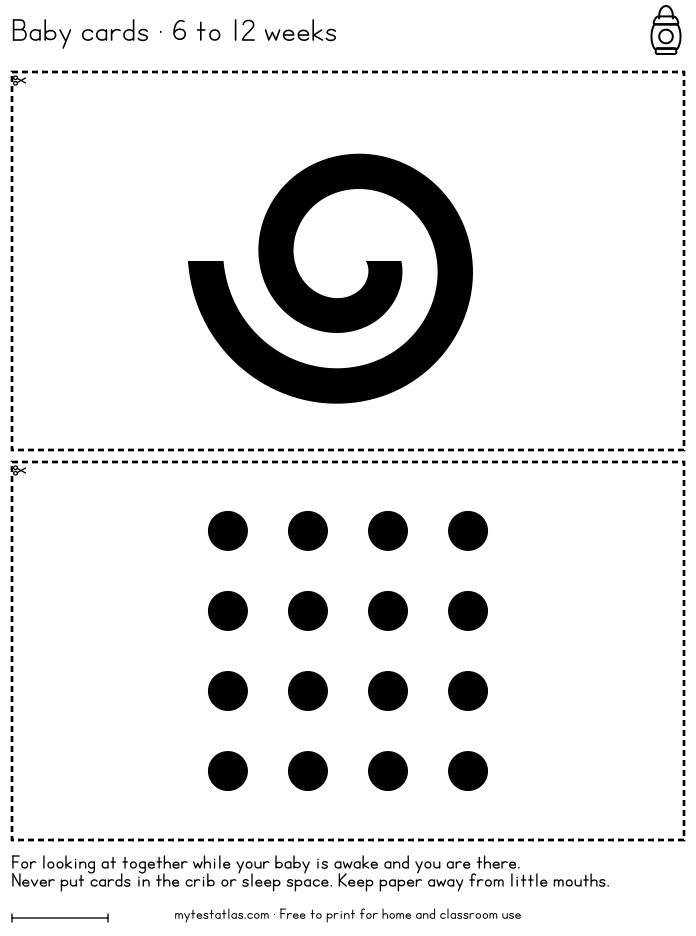
6 to 12 weeks: faces and checkerboards. Your baby can take in smaller checks, dots, a spiral and the cow’s face, with stripes and checks at least 8 mm, about 1/3 inch, wide.
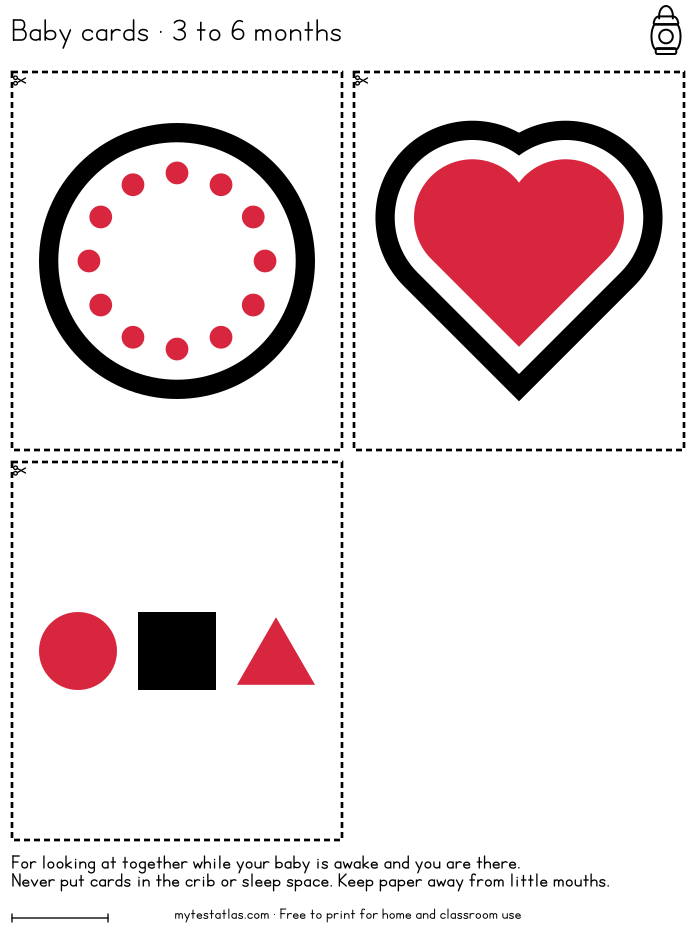
3 to 6 months: red and black on white. Red is one of the first colors babies pick out. On these cards red only ever touches white, and a white gap keeps it apart from black, with shapes at least 5 mm, about 1/5 inch, wide.
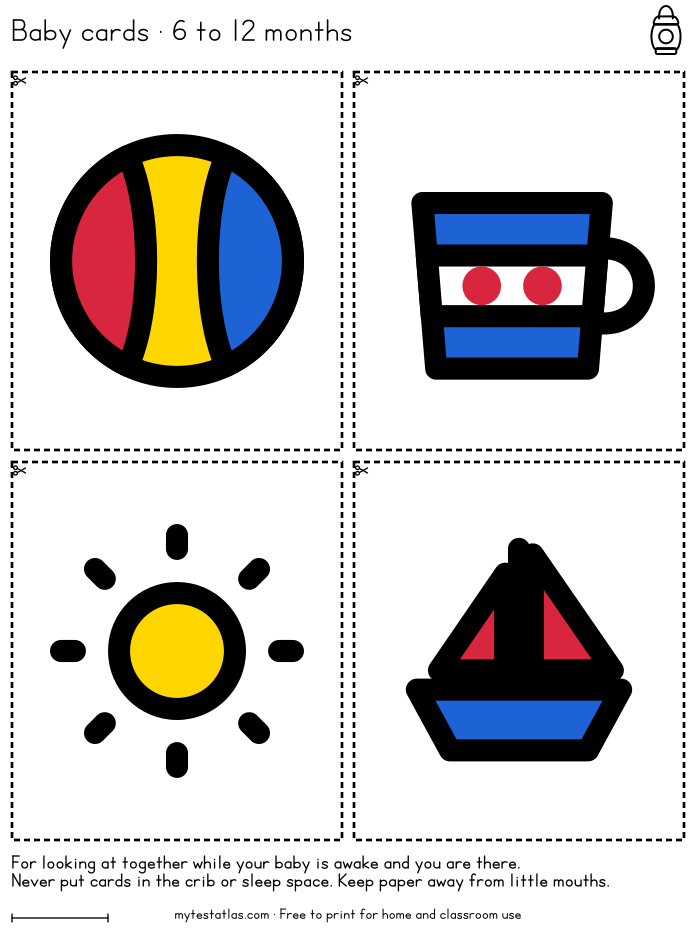
6 to 12 months: color pictures to name. A cow, a cat, a frog, a ball, a cup, the sun, a whale and a boat, drawn with bold outlines. From 6 months, cards become a small part of play: name the picture together (“A cow! Moo.”), then move on to board books and real objects.
How to use them
Hold a card 8 to 12 inches from your baby’s face, to one side as well as in the middle. Use a quiet, alert moment, or stand the book or strip in front of your baby during tummy time. From about 3 months, move a card slowly from side to side and let your baby follow it with their eyes; within reach, let them bat at it.
Talk while you show it. Your face and voice matter more than the card.
When to stop
Follow your baby. Looking away, turning the head, fussing, arching the back, yawning or hiccups mean “enough for now”. That can be after a few seconds or a couple of minutes. There is no right number of minutes and no target.
Why paper, not a screen
The World Health Organization advises no screen time for babies under 1, and the American Academy of Pediatrics advises avoiding screens other than video chat before 18 months. A printed card is also better to look at: no glare, no auto-lock, no notifications. So this page shows only small previews for you, and nothing for your baby to watch. Nothing on this page moves.
When to talk to a doctor about your baby’s eyes
Talk to your baby’s doctor if you notice:
- a white or grey-white pupil, including in a photo;
- an eye that turns in, out, up or down most of the time after about 4 months;
- eyes that flutter or shake;
- very strong sensitivity to light, or constant tearing;
- a drooping eyelid that covers the pupil;
- by about 3 months, your baby not watching faces or following a moving face or toy.
Checking eyes is part of every well-baby visit, and you can ask at any visit.
What these cards do not do
They do not make a baby smarter, speed up development or improve eyesight. They give your baby something they can see clearly while you talk and play. That shared moment is the point.
Printing tips
Print on Letter or A4 paper, in portrait, at 100 % (turn “fit to page” off). Cards print inside the page margins; trim along the dashed lines. The short line with end ticks in each sheet’s footer is 1 inch long at 100 %, so you can check the scale with a ruler. Save ink prints lighter patterns, and card stock makes sturdier cards. Every line of text on a sheet is black, and every color area has a black outline or a white gap, so the cards also print well in grayscale.
What this page keeps
Nothing. The cards are drawn in your browser. This page keeps no settings, sets no cookies and sends nothing about you or your baby. Privacy policy, section 12
Questions
- Is it free?
- Yes. Every card set, the book and the strip are free to print for home and classroom use. There are no ads.
- Do I need an email?
- No. There is no account, no sign-up and no email. The cards are drawn in your browser.
- Can I print on A4?
- Yes. Every sheet fits US Letter and A4 paper, in portrait, with the usual margins.
- Why can’t I get a 4-per-page newborn set with every card?
- A newborn needs big shapes, so a card that would be too small for 0 to 6 weeks is left out rather than shrunk; choose 1 or 2 per page to print it.
- Why is there no mobile?
- A hanging mobile means strings over a crib, and nothing should be in or over a baby’s sleep space.
- Can I show the cards on my phone?
- No, and we suggest you don’t: the World Health Organization advises no screen time for babies under 1, and a phone’s glare and lock screen get in the way. Print the cards instead; the page shows only small previews for you.
Where this comes from
- Teller Acuity Cards reference values (American Journal of Ophthalmology, 1986); Teller Acuity Cards II, a meta-analysis of normative data (2025)
- American Optometric Association, Infant vision: birth to 24 months of age
- Fantz, R. L. (1963). Pattern vision in newborn infants. Science, 140, 296
- World Health Organization (2019). Guidelines on physical activity, sedentary behaviour and sleep for children under 5 years of age
- American Academy of Pediatrics (2016). Media and Young Minds. Pediatrics, 138(5)
- American Academy of Pediatrics (2022). Sleep-Related Infant Deaths: Updated 2022 Recommendations for Reducing Infant Deaths in the Sleep Environment. Pediatrics, 150(1)
- American Academy of Pediatrics, HealthyChildren.org: eyes and vision
- Centers for Disease Control and Prevention, milestone checklists (2 and 4 months)